Colorado Financial Literacy Standards and Policy Ranking

The Colorado Financial Educators Council (COFEC) is the state advocacy chapter of the National Financial Educators Council (NFEC). Our role is to advance policy, standards alignment, and statewide action to ensure that Colorado students graduate prepared to manage real-world financial decisions.

The NFEC conducts national research and develops academic standards. COFEC translates that research into policy advocacy specific to Colorado.  Our shared mission is to ensure that all learners graduate prepared to navigate real-world financial decisions by elevating financial education to the same level of quality, accountability, and instructional integrity as other required core academic subjects.
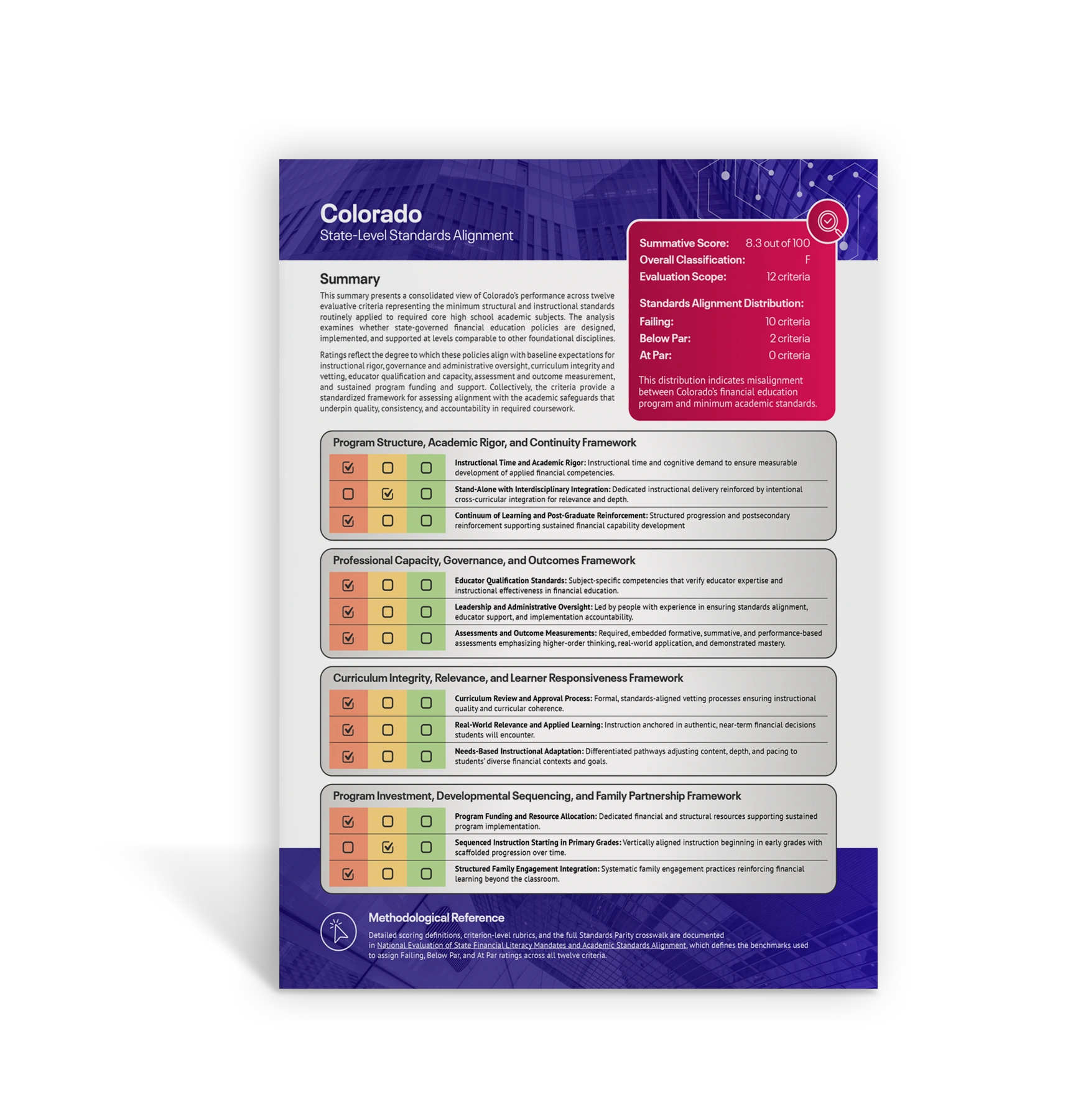
Colorado Financial Education Standards Alignment: A State-Level Policy Assessment

Based on an analysis conducted by the National Financial Educators Council (NFEC), Colorado’s financial education standards are misaligned with the minimum academic benchmarks commonly expected of core required high school coursework such as mathematics, science, and English/language arts. Using a 12-criterion framework applied across all 50 U.S. states, the NFEC explored whether state-level financial education policies meet baseline expectations for instructional rigor, governance, curriculum quality, educator qualifications, evaluation practices, and continuing program support.

This evaluation revealed that Colorado’s financial education standards alignment has notable deficiencies in meeting established benchmarks for comprehensive financial literacy instruction. With a summative alignment score of 8.3 out of 100 and an overall classification of “Failing,” the findings indicate substantial gaps across the evaluated framework. Of the 12 criteria assessed, 10 fall within the failing category, while the remaining 2 are rated below par, and none achieve an at-par designation. This distribution suggests that current standards lack sufficient rigor, coherence, or coverage to fully support effective financial education outcomes for learners across the state.

Colorado Financial Education Assessment

COFEC’s Advocacy Focus in Colorado

COFEC works to ensure that financial education is treated as a core academic subject rather than optional enrichment. Our advocacy is organized to advance priorities that align Colorado’s policy environment with established academic expectations.
Research & Policy Guidance

COFEC promotes financial education policies aligned with core academic standards, emphasizing clear outcomes, educator preparedness, and accountability. Grounded in national research, COFEC works with educators, community leaders, and policymakers to identify gaps, evaluate legislation, and support scalable, standards-aligned implementation.

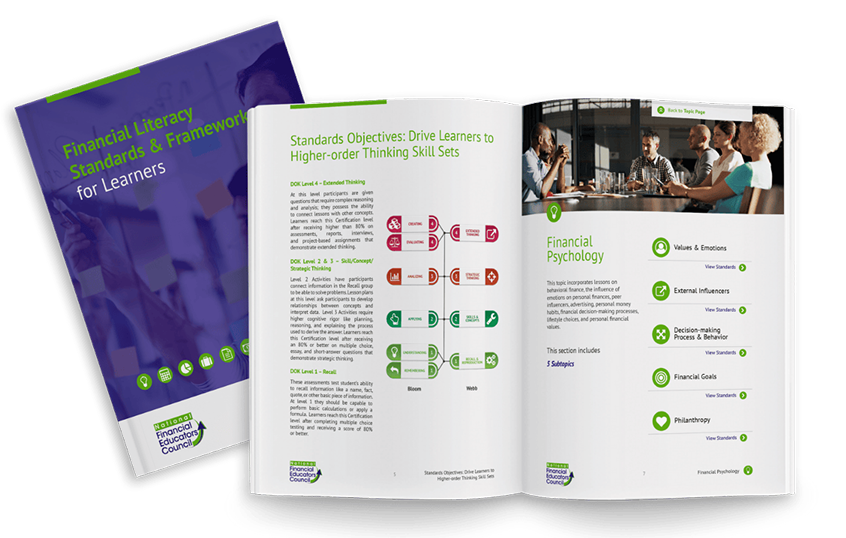
Standards for Financial Educators and Learners

COFEC supports the adoption of comprehensive learner outcome standards and educator competency frameworks to strengthen instructional quality statewide. By providing clear benchmarks for what students should know and be able to do – and what educators must demonstrate to teach effectively – COFEC helps establish consistent expectations that support long-term financial capability development.

Closing Statement

Colorado’s students deserve more than exposure to financial concepts; they deserve real preparation for the financial decisions that shape adulthood. These findings reveal a clear opportunity to strengthen financial education by aligning it with the rigor and accountability applied to other core subjects.

By advancing standards-based reform and investing in quality implementation, Colorado can ensure that every student graduates financially prepared for life beyond high school. Meaningful progress requires collective action from educators, families, policymakers, and community leaders – working together to make financial education a foundational part of a future-ready education system.

National Financial Educators Council

Colorado Financial Literacy Legislation – 1-page Summary

Colorado Department of Education – Financial Literacy Homepage

Colorado Academic Standards – Financial Literacy Standards (P-12, adopted 2022)

Legislation

Personal Finance Certification for Educators (Resource Bank Detail)

State chapters: Mission and impact

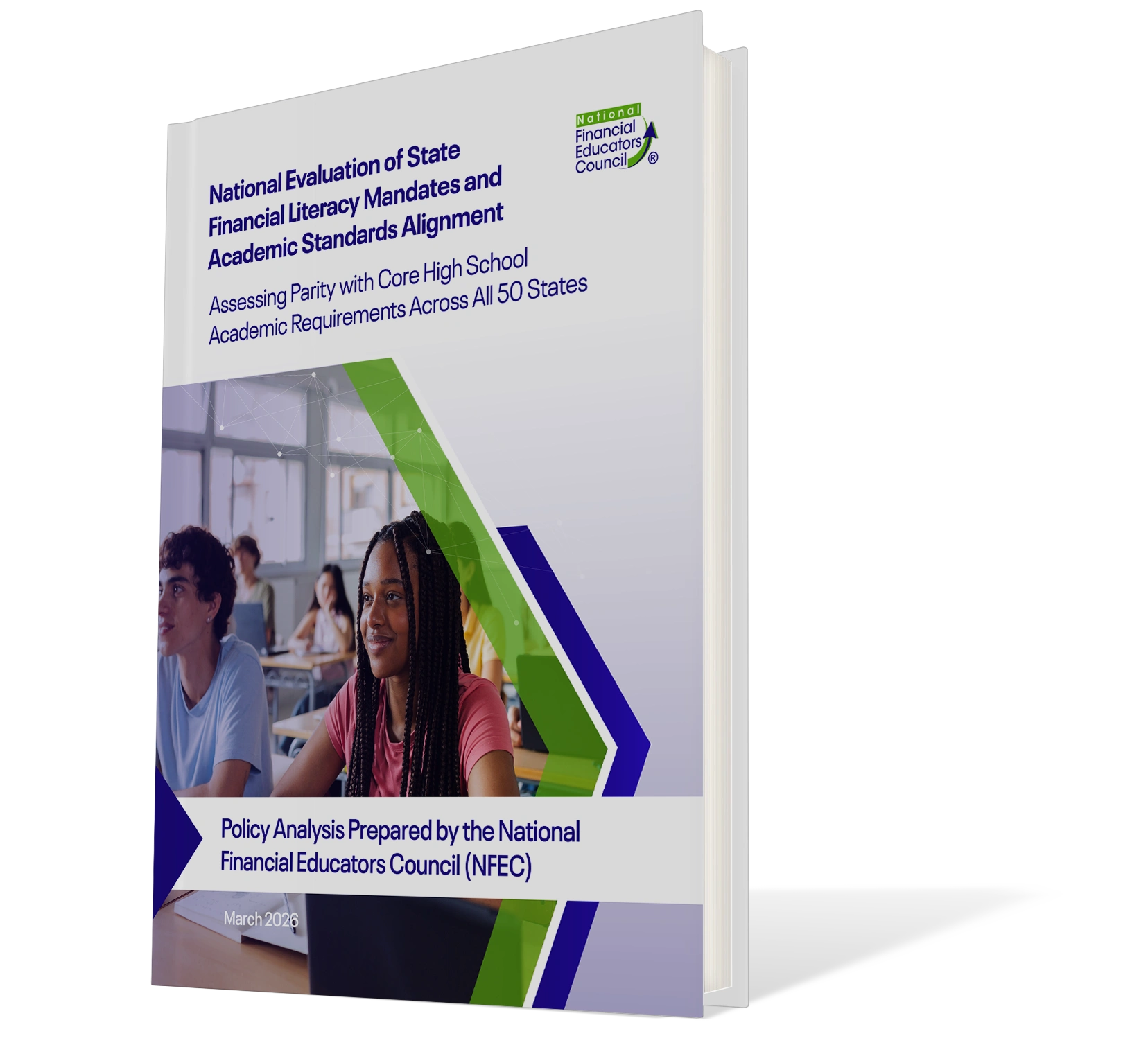
National Evaluation of State Financial Literacy Mandates and Academic Standards Alignment

State-Mandated Financial Literacy Standards: A Comprehensive National Review

Personal finance teaching standards

Financial education services training

Teaching young adults about money

Financial Literacy Standards in Colorado

As of 2026, Colorado requires that students complete a high school course incorporating the statewide financial literacy standards in order to graduate. This requirement was enacted through House Bill 25-1192 (2025) and goes into effect for the 2027-28 school year. Districts may meet the requirement either by offering a standalone personal finance course or by embedding the full set of financial literacy standards into another required course. Source.

Financial literacy standards in Colorado are defined within the Personal Financial Literacy Expectations Addendum of the Colorado Academic Standards – covering income, saving, spending, taxes, credit, insurance, risk management, and financial decision-making. Source.

The American Public Education Foundation (APEF) issues a “report card” biennially that awards each U.S. state, DC, and Puerto Rico a grade for its K-12 financial literacy education policies. The fourth edition of the Nation’s Report Card on Financial Literacy – titled “Empowering Tomorrow’s Generation” – launched in September 2025. The state-level grades are based on currently available statewide requirements, standards, and curriculum for teaching personal finance in schools.

The report card distinguished Colorado with an “A” grade for its financial literacy education standards and mandates in 2025. The foundation’s reasoning was that the state has financial literacy standards in place for all of grades K-12; offers schools a financial literacy resource bank and newsletter; and, most importantly, requires completion of a financial literacy course for high school graduation.

The Centennial State’s financial literacy education benchmarks were adopted in 2008 after passage of HB08-1168, which mandated that the board of education should include standards for financial literacy in the process of revising and adopting the state content standards. In 2025, the CO General Assembly took this legislation to the next level by passing HB25-1192, the “Financial Literacy Graduation Requirement Act” for Pre- and K-12 schools, which was signed into law in May of that year. The bill sets a mandate for students to complete a course that incorporates all the state financial literacy standards in order to graduate from high school. The policy also requires that, during their graduation year, all students must be exposed to federal financial aid eligibility tools and net price calculators; and practice filling out a free application for federal student aid or the Colorado application for state financial aid. This legislation goes into effect during the 2027-2028 school year.

The Colorado Academic Standards Board published a document titled Personal Financial Literacy Expectations: Addendum to Social Studies and Mathematics Standards in December 2008. These standards require implementation of age-appropriate financial literacy instruction in all grade levels K-12, across four main areas: 1) Goal-setting, Financial Responsibility, and Careers; 2) Planning, Income, Saving, and Investing; 3) Using Credit; and 4) Risk Management. The APEF considers these standards adequate to ensure that Colorado students are exposed to financial literacy concepts throughout their entire school careers.

The Colorado board also maintains a resource bank of financial literacy-related materials that is currently available on the state Department of Education website. These resources include the state standards, information with links to state and national financial literacy programs, a monthly newsletter, and ways to get involved in financial education.